
VENDÉE GLOBE
Vendée Globe: Hurtling Home
redazione
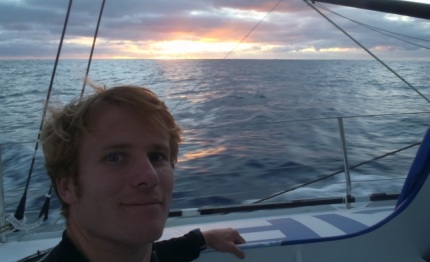
It's been fun but the time is coming, to bring down the final curtain and move along because the home strait sprint has begun. This morning, the two race leaders passed the symbolic 1000 miles point from Les Sables d'Olonne, the start and finish of the solo race around our beautiful planet. Doing between 15 and 17 knots throughout the night in a west wind of 20 knots, François Gabart (MACIF) has a tight grip on the lead in the seventh Vendée Globe, Armel Le Cléac’h (Banque Populaire) slight gains overnight are not significant enough to dent the 101 mile lead of the ‘Goldenboy’ Gabart. Both sailing on a port tack they have one last gybe to make before they sail directly home. Gabart will turn in the morning and Le Cléac'h around four hours later. The new arrival time for the first boat is now Sunday January 27 at 3 am. Alex Thomson third place in sight 732 miles behind the leaders, 450 miles south-west of the Azores, Jean-Pierre Dick (Virbac Paprec 3) is sailing keel-less in a south-westerly wind of 15 knots doing an average speed of 10 knots and covering in the last 24 hours, a respectable distance of 230 miles. It is a remarkable feat considering the major damage suffered by the skipper and the challenges this ill-fated situation imposes upon him. It is not enough however, to keep Alex Thomson (Hugo Boss) at bay, who is sailing consistently 2.5 knots faster. He is currently 35 miles behind Dick and is expected to pass him today. It will be a bittersweet moment for Thomson. This will not be his preferred conclusion. The trials and tribulations of ocean yacht racing alters the perspective of the competitor. To endure three months of your life, in such inhospitable conditions, in order to realise your dreams and to have them broken beneath you in a matter moments so close and yet so far from the end is not the outcome that any member of the fleet wishes upon another. To stop or continue is the dilemma that Jean-Pierre Dick (Virbac Paprec 3) continues to battle with. He will make his decision Sunday. Heading towards the west of the Azores in fickle southwest winds of 15-20 knots, moving around to the south this evening, as he approaches the islands it gives Jean-Pierre Dick time to get the measure of the situation. He is assessing his boat and it’s performance with different sail combinations and filled ballasts. Is it stable enough? This is what he must decide. Jean-Pierre Dick (Virbac Paprec 3) is determined individual and from the outset he was sailing to win but now to simply finish this hardcore race would be a victory in itself. Can he do it? Back in the northern hemisphere For both Jean Le Cam (SynerCiel) and Mike Golding (Gamesa) will have water draining anti-clockwise down their plugholes once more as they cross the Equator into the northern hemisphere. Although this will be the last thing on their minds as they have both encountered the worst South Atlantic in both their long careers. Jean Le Cam (SynerCiel) passed 19.22 GMT after 75 days, 6 hours and 58 minutes of racing and Mike Golding (Gamesa) passed 5 hours later at 00.14 GMT after 75 days, 12 hours, 12 minutes and 26 seconds of racing. The South Atlantic idle Dominique Wavre (Mirabaud) 440 miles behind Le Cam has had a better day than most in the tortuous South Atlantic as he is the only sailor to make double digits over 24 hours. With a 10-15 knot wind he should cross the Equator is around 30 hours. Still far to the west, 80 miles off the Brazilian coast, Arnaud Bossières (Akena Verandas) seems to be picking up speed, while a very frustrated Javier Sanso (Acciona 100% EcoPowered) is trapped in a windless hole, with no wind instruments crawling along at 4.2 knots. It’s not the high speeds that send skippers crazy but instead being becalmed going nowhere fast which drives them to distraction. Back lag Bertrand De Broc (Votre Nom Autour du Monde avec EDM) is 168 miles behind the Spaniard while Tanguy de Lamotte (Initiatives Cœur) is a further 300 miles behind. 4323 behind the leader, Alessandro Di Benedetto (Team Plastique) will be a winner because without doubt he has captured the hearts and minds of us all. The road is long for him but the support unending and he will be cheered on until the very end.
25/01/2013 10:08:00 © riproduzione riservata
Tweet
 ARTICOLI
CORRELATI
I PIU' LETTIDELLA SETTIMANA
Route du Rhum: Ambrogio Beccaria pronto a sfidare l'Oceano
Ambrogio Beccaria: una seconda Route du Rhum, la prima in IMOCA a bordo di “Allagrande Mapei”
Concluso a Malcesine il primo Campionato Italiano Classi Foil
La pioggia non ferma le regate: mattina e pomeriggio, programma completo. La cerimonia di premiazione e chiusura: tutti i titoli italiani e i podi
Vele Storiche Viareggio 2026, i vincitori del 21° Raduno
Conclusa a Viareggio la ventunesima edizione del Raduno Vele Storiche Viareggio, organizzato dall’associazione presieduta da Gianni Fernandes, insieme al Club Nautico Versilia guidato dall’Amm. Ispett. Capo (Cp) Marco Brusco
Conclusa l'edizione 41 della Coppa Italia UVAI Trofeo MAG
COPPA ITALIA UVAI 2026 Trofeo MAG. Vittoria del First 35 South Kensington di Massimo Licata d’Andrea. Al C.C. Aniene per il secondo anno consecutivo la Coppa Italia UVAI per Circoli
Rolex Middle Sea Race, Black Jack 100 conquista la Line Honours
Il maxi di Remon Vos chiude le 606 miglia in 51 ore, 51 minuti e 50 secondi. Intanto prosegue la sfida per la classifica IRC, con Django 7X e Balthasar ancora in lotta.
America's Cup: ARC Team USA si rafforza, arrivano Annie Haeger e Ben Rosenberg
La velista olimpica di Rio 2016 e il giovane talento di Newport entrano nel gruppo che prepara la campagna americana per Napoli. Rosenberg avrà anche un ruolo nell'analisi delle prestazioni, mentre il team annuncia nuove novità in vista del varo dell'AC75
Napoli: una grande prima giornata al CICO 2026
Primo giorno ricco di vento e regate al Campionato Italiano delle Classi Olimpiche Edison Next (CICO) di Napoli 2026 che riunisce 347 barche e 399 velisti delle dieci discipline olimpiche e di tre classi Para Sailing
Con la "Veleziana" la vela paralimpica nel cuore di Venezia
Sono stati dodici gli Hansa 303 in acqua e la vittoria è andata a Silvia Ragni e Paolo Casasola del Vela Club Levanto
America’s Cup: La Roche-Posay vara a Napoli il suo AC75
A soli 215 giorni dall’inizio della Louis Vuitton 38a America’s Cup, La Roche-Posay Racing Team, in rappresentanza della Société Nautique de Saint-Tropez, è diventato il primo team a varare un AC75 e a navigare nel Golfo di Napoli
Rolex Middle Sea Race, Django 7X batte Balthasar: vittoria in IRC 1 per l’Italia
Giovanni Lombardi Stronati e il tattico Vasco Vascotto protagonisti di un duello serrato lungo 606 miglia. Daguet 5 passa al comando della IRC 2, mentre resta aperta la corsa alla vittoria assoluta in compensato